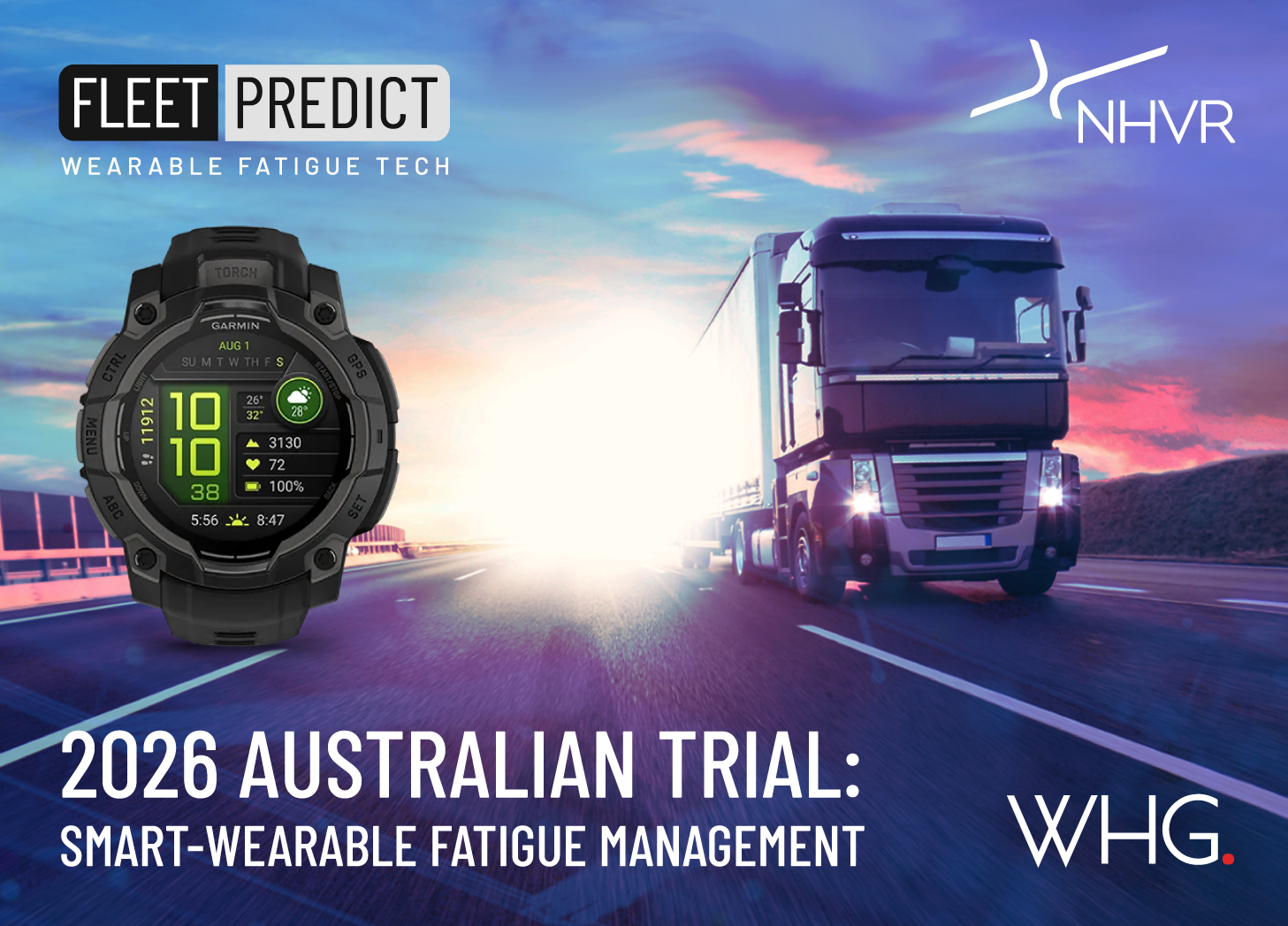

An initiative supported by the National Heavy Vehicle Regulators (NHVR) Heavy Vehicle Safety Initiative (HVSI) grant program, supported by the Australian Government, evaluating how smart wearable technology can deliver measurable improvement in fatigue management and heavy vehicle safety.

An initiative supported by the National Heavy Vehicle Regulators (NHVR) Heavy Vehicle Safety Initiative (HVSI) grant program, supported by the Australian Government, evaluating how smart wearable technology can deliver measurable improvement in fatigue management and heavy vehicle safety.




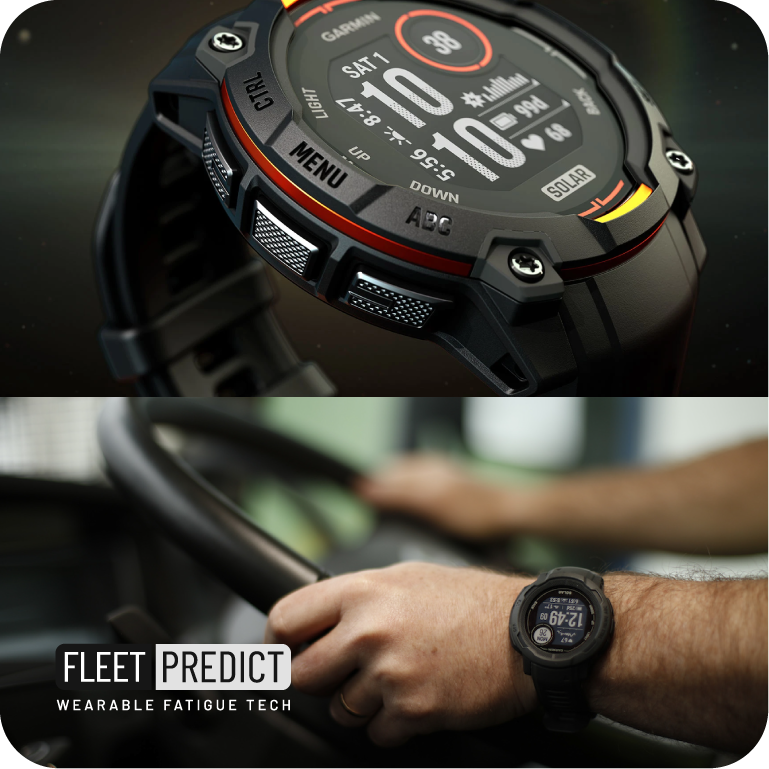
FleetPREDICT is a predictive fatigue monitoring technology that uses smart wearables, real-time analytics, and has been scientifically validated through sleep studies and dynamic driving assessments.
FleetPREDICT is a predictive fatigue monitoring technology that uses smart wearables, real-time analytics,
and has been scientifically validated through sleep studies and dynamic driving assessments.
BENEFITS

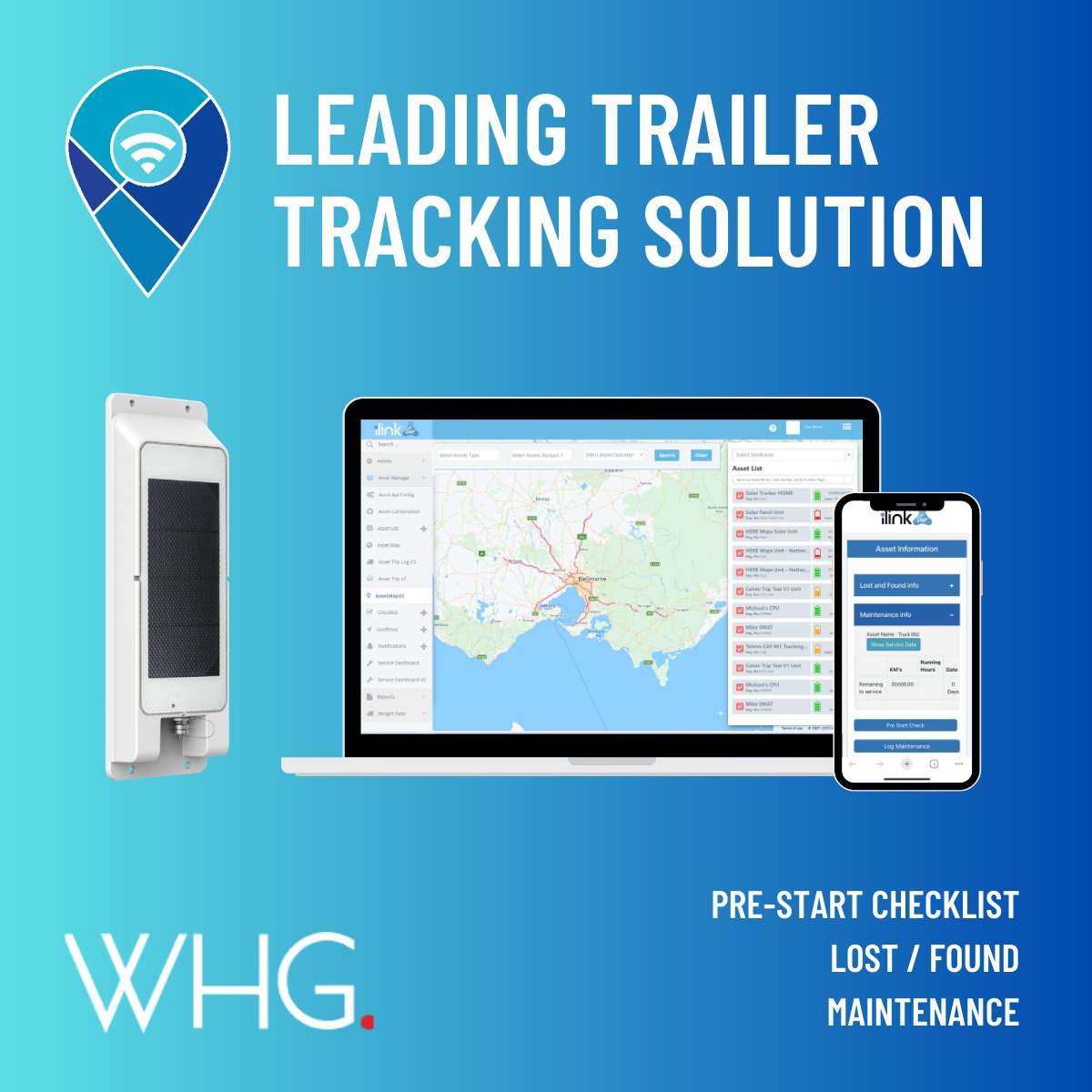
Built to track non-powered, high value assets
Simple to set up and easy to use
An end-to-end solution with simple service offerings
Service reminders
API available to integrate into your systems
Attach the device and simply activate in the portal
Integration into existing back office software (available on request)




ABOUT THE TRIAL:
This trial funded through National Heavy Vehicle Regulator's Heavy Vehicle Safety Initiative, supported by the Australian Government, is evaluating how smart wearable fatigue monitoring technology performs in real-world transport environments. The trial will run throughout 2026.
The trial assesses:
• Accuracy of smart wearable fatigue detection
• Integration into fleet operations
• Driver acceptance of smart wearable technology
• Measurable safety outcomes
The results will inform:
• Industry best practice
• Fatigue management guidelines
• Future regulatory direction

Federally Funded:
This project is a national trial funded by the National Heavy Vehicle Regulators (NHVR), Heavy Vehicle Safety Initiative (HVSI), supported by the Australian Government, designed to evaluate how smart wearable fatigue monitoring technology can improve driver safety and reduce fatigue-related risk in heavy vehicle operations.
WHG will conduct a real-world implementation of FleetPREDICT with national fleet carriers, generating evidence to support the future of fatigue management in Australia.
Evidence collected during the trial will inform new industry guidelines and educational resources to encourage broader adoption of fatigue management wearables across the freight and logistics sector.
For more information on the HVSI program, visit: www.nhvr.gov.au/hvsi

INDUSTRY IMPACT:
Advancing Smart Wearable Safety Technology in Transport.
This project contributes to the broader adoption of smart wearable fatigue monitoring technology across the Australian transport industry.
It supports:
• Development of fatigue management best practices
• Evidence-based safety innovation
• Alignment with NHVR safety initiatives
• National road safety outcomes
Findings will be shared with industry stakeholders to support long-term adoption
This project, delivered by WHG, with support from NHVR, brings together innovation and expertise across technology, science, and wearable innovation to deliver a robust, evidence-based approach to fatigue monitoring.
ABOUT THE TRIAL:
This trial funded through National Heavy Vehicle Regulator's Heavy Vehicle Safety Initiative, supported by the Australian Government, is evaluating how smart wearable fatigue monitoring technology performs in real-world transport environments. The trial will run throughout 2026.
The trial assesses:
• Accuracy of smart wearable fatigue detection
• Integration into fleet operations
• Driver acceptance of smart wearable technology
• Measurable safety outcomes
The results will inform:
• Industry best practice
• Fatigue management guidelines
• Future regulatory direction
Federally Funded:
This project is a national trial funded under the National Heavy Vehicle Regulator (NHVR), Heavy Vehicle Safety Initiative (HVSI), designed to evaluate how smart wearable fatigue monitoring technology can improve driver safety and reduce fatigue-related risk in heavy vehicle operations.
WHG will conduct a real-world implementation of FleetPREDICT with national fleet carriers, generating evidence to support the future of fatigue management in Australia.
Evidence collected during the trial will inform new industry guidelines and educational resources to encourage broader adoption of fatigue management wearables across the freight and logistics sector.
For more information on the HVSI program, visit: www.nhvr.gov.au/hvsi
INDUSTRY IMPACT:
INDUSTRY IMPACT:
Advancing Smart Wearable Safety Technology in Transport.
This project contributes to the broader adoption of smart wearable fatigue monitoring technology across the Australian transport industry.
It supports:
• Development of fatigue management best practices
• Evidence-based safety innovation
• Alignment with NHVR safety initiatives
• National road safety outcomes
Findings will be shared with industry stakeholders to support long-term adoption
This project, delivered by WHG, with support from NHVR, brings together innovation and expertise across technology, science, and wearable innovation to deliver a robust, evidence-based approach to fatigue monitoring.
THE SOLUTION:
How Smart Wearable Fatigue
Monitoring Solution Works:
FleetPREDICT:
FleetPREDICT is a predictive driver safety and fatigue management solution developed by WHG Technologies and SAT (Sleep Advice Technologies) in collaboration with Garmin.
Using Garmin-compatible wearables and objective science based algorithms, it delivers early-warning alerts before fatigue or impairment leads to risk.
Scientifically Validated:
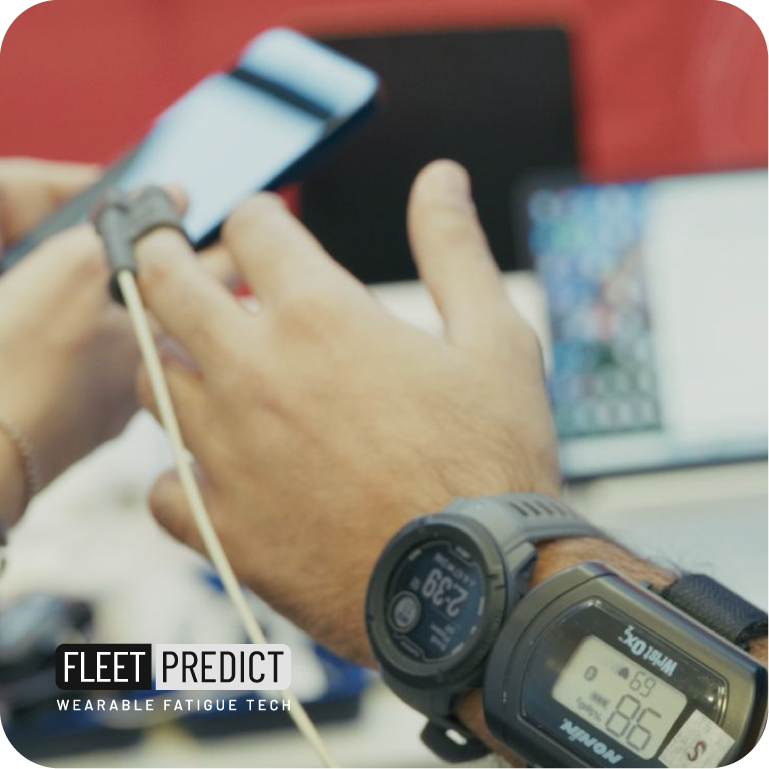
FleetPREDICT utilises an advanced wearable sensor, to monitor fatigue in real-time. The solution provides real-time fatigue alerts and features a comprehensive dashboard.
FleetPREDICT is medically proven and award nominated, and offers a user friendly interface with easy integration capabilities.
Privacy Focused:
FleetPREDICT is designed to prioritise privacy and trust.
FleetPREDICT monitoring only occurs during active driving, all data is anonymised and de-identified, and no personal or commercial data is shared. FleetPREDICT is fully compliant with the Australian privacy standard.

FleetPREDICT Implementation in European Transport Fleets:
FleetPREDICT has been implemented across European transport fleets, capturing over 2,250 hours of driving data and 130,000 km of operations. The results demonstrate improved fatigue risk detection and increased visibility into driver alertness, encouraging the shift toward predictive, data-driven safety.
THE SOLUTION:
How Smart Wearable Fatigue Monitoring Solution Works:
FleetPREDICT:
FleetPREDICT is a predictive driver safety and fatigue management solution developed by WHG Technologies and SAT (Sleep Advice Technologies) in collaboration with Garmin.
Using Garmin-compatible wearables and objective science based algorithms, it delivers early-warning alerts before fatigue or impairment leads to risk.
Scientifically Validated:
FleetPREDICT utilises an advanced wearable sensor, to monitor fatigue in real-time.
The solution provides real-time fatigue alerts and features a comprehensive dashboard.
FleetPREDICT is medically proven and award nominated, and offers a user friendly interface with easy integration capabilities.
Privacy Focused:
FleetPREDICT is designed to prioritise privacy and trust.
FleetPREDICT monitoring only occurs during active driving, all data is anonymised and de-identified, and no personal or commercial data is shared. FleetPREDICT is fully compliant with the Australian privacy standard.
FleetPREDICT Implementation in European Transport Fleets:
FleetPREDICT has been implemented across European transport fleets, capturing over 2,250 hours of driving data and 130,000 km of operations. The results demonstrate improved fatigue risk detection and increased visibility into driver alertness, encouraging the shift toward predictive, data-driven safety.
PARTICIPATING FLEETS:

Linfox
One of Australia’s largest logistics providers with national scale, mature safety frameworks and an in-house fatigue and human behaviour science team.

Wettenhalls
A long-standing, multi-site transport operator with a strong focus on compliance and operational discipline. They celebrated their 100th year of operation in 2025.

FBT Transwest
A progressive fleet who pioneer the bulk liquid and tanker transport segment, recognised for early adoption of safety and telematics innovation.
Team Transport
A growing operator with strong regional presence and practical fleet operations insight.
PARTICIPATING FLEETS:
Linfox
One of Australia’s largest logistics providers with national scale, mature safety frameworks and an in-house fatigue and human behaviour science team.
Wettenhalls
A long-standing, multi-site transport operator with a strong focus on compliance and operational discipline. They celebrated their 100th year of operation in 2025.
FBT Transwest
A progressive fleet who pioneer the bulk liquid and tanker transport segment, recognised for early adoption of safety and telematics innovation.
Team Transport
A growing operator with strong regional presence and practical fleet operations insight.
DRIVING INNOVATION TOGETHER:
This project, delivered by WHG, with support from NHVR, brings together innovation and expertise across technology, science, and wearable innovation to deliver a robust, evidence-based approach to fatigue monitoring.

WHG
WHG Technologies is a leading technology provider specialising in connected mobility, IoT, and safety innovation. With more than 35 years of experience, WHG delivers end-to-end enterprise solutions covering hardware design, firmware, software development, manufacturing, and implementation. WHG connects over 45,000 devices monthly across transport, logistics, and enterprise sectors.
Certified by Transport Certification Australia (TCA), WHG provides trusted telematics and compliance solutions, while also advancing new frontiers in AI-powered smart wearables, predictive analytics, integrated safety platforms and more. WHG’s vision is to make the adoption of technology easier and more cost-effective across all markets, supporting fleets, OEMs, and industry partners worldwide.
Visit the WHG website to learn more: whg-telematics.com

NHVR
The National Heavy Vehicle Regulator (NHVR) is Australia’s independent regulator for all heavy vehicles over 4.5 tonnes gross vehicle mass.
The NHVR’s Heavy Vehicle Safety Initiative (HVSI) funds projects that support real, measurable safety improvements in the heavy vehicle industry.
Since 2016, NHVR's invested over $45 million through HVSI into 181 projects that reduce road trauma and improve outcomes for all road users.
For more information on the HVSI program, visit NHVR’s website: www.nhvr.gov.au/hvsi
FleetPREDICT was developed by WHG Technologies and SAT
(Sleep Advice Technologies), and uses Garmin smart-wearables.

DRIVING INNOVATION TOGETHER:
This project, delivered by WHG, with support from NHVR, brings together innovation and expertise across technology, science, and wearable innovation to deliver a robust, evidence-based approach to fatigue monitoring.
WHG
WHG Technologies is a leading technology provider specialising in connected mobility, IoT, and safety innovation. With more than 35 years of experience, WHG delivers end-to-end enterprise solutions covering hardware design, firmware, software development, manufacturing, and implementation. WHG connects over 45,000 devices monthly across transport, logistics, and enterprise sectors.
Certified by Transport Certification Australia (TCA), WHG provides trusted telematics and compliance solutions, while also advancing new frontiers in AI-powered smart wearables, predictive analytics, integrated safety platforms and more. WHG’s vision is to make the adoption of technology easier and more cost-effective across all markets, supporting fleets, OEMs, and industry partners worldwide.
Visit the WHG website to learn more: whg-telematics.com
WHG
WHG Technologies is a leading technology provider specialising in connected mobility, IoT, and safety innovation. With more than 35 years of experience, WHG delivers end-to-end enterprise solutions covering hardware design, firmware, software development, manufacturing, and implementation. WHG connects over 45,000 devices monthly across transport, logistics, and enterprise sectors.
Certified by Transport Certification Australia (TCA), WHG provides trusted telematics and compliance solutions, while also advancing new frontiers in AI-powered smart wearables, predictive analytics, integrated safety platforms and more. WHG’s vision is to make the adoption of technology easier and more cost-effective across all markets, supporting fleets, OEMs, and industry partners worldwide.
Visit the WHG website to learn more: whg-telematics.com
NHVR
The National Heavy Vehicle Regulator (NHVR) is Australia’s independent regulator for all heavy vehicles over 4.5 tonnes gross vehicle mass.
The NHVR’s Heavy Vehicle Safety Initiative (HVSI) funds projects that support real, measurable safety improvements in the heavy vehicle industry. Since 2016, NHVR's invested over $45 million through HVSI into 181 projects that reduce road trauma and improve outcomes for all road users.
For more information on the HVSI program,
visit NHVR’s website: www.nhvr.gov.au/hvsi
NHVR
The National Heavy Vehicle Regulator (NHVR) is Australia’s independent regulator for all heavy vehicles over 4.5 tonnes gross vehicle mass.
The NHVR’s Heavy Vehicle Safety Initiative (HVSI) funds projects that support real, measurable safety improvements in the heavy vehicle industry.
Since 2016, NHVR's invested over $45 million through HVSI into 181 projects that reduce road trauma and improve outcomes for all road users.
For more information on the HVSI program, visit NHVR’s website: www.nhvr.gov.au/hvsi
FleetPREDICT was developed by WHG Technologies and SAT
(Sleep Advice Technologies), and uses Garmin smart-wearables.
FleetPREDICT was developed by WHG Technologies and SAT
(Sleep Advice Technologies), and uses Garmin smart-wearables.
FAQs
What is smart wearable fatigue monitoring?
Smart wearable fatigue monitoring uses wearable devices and predictive analytics to assess physiological signals and identify early signs of fatigue in drivers.
How does smart wearable fatigue monitoring work?
Smart wearable devices collect physiological data such as heart rate and sleep-related indicators. This data is analysed using validated algorithms to detect fatigue patterns and provide early alerts.
How is this different from traditional fatigue management approaches?
Traditional approaches rely on compliance, observation, and retrospective reporting.
Smart wearable fatigue monitoring adds a real-time, data-driven layer that supports earlier awareness of fatigue risk.
Is this technology being used in real-world conditions?
Yes. This project involves a national, real-world trial across selected fleet operations, supported by the NHVR Heavy Vehicle Safety Initiative.
Who is involved in the trial?
The trial is being delivered by WHG Technologies in partnership with Sleep Advice Technologies (SAT) and Garmin. Participation is by invitation, with selected fleets contributing to the trial.
What is the purpose of the trial?
The trial is designed to evaluate the effectiveness of smart wearable fatigue monitoring in live operating environments and generate evidence to support industry guidance and future adoption.
Will the results of the trial be shared?
Yes. Insights from the trial will inform industry guidance, best practice frameworks, and broader understanding of wearable fatigue technology.
Is driver data kept private?
Yes. Data is anonymised and de-identified, and monitoring is limited to periods of active driving.
Does this replace existing fatigue management systems?
No. Smart wearable fatigue monitoring is designed to complement existing systems by providing an additional layer of insight.
Is this technology accurate?
The technology is based on validated algorithms and scientific research.
This trial will further evaluate its performance in real-world conditions.
Why is the NHVR supporting this project?
The NHVR Heavy Vehicle Safety Initiative supports projects that deliver measurable improvements in safety and help reduce road trauma across Australia.
How could this impact the industry?
The findings may inform future fatigue management practices, support evidence-based decision making, and contribute to evolving safety standards across the transport sector.
FAQs
What is smart wearable fatigue monitoring?
Smart wearable fatigue monitoring uses wearable devices and predictive analytics to assess physiological signals and identify early signs of fatigue in drivers.
How does smart wearable fatigue monitoring work?
Smart wearable devices collect physiological data such as heart rate and sleep-related indicators.
This data is analysed using validated algorithms to detect fatigue patterns and provide early alerts.
How is this different from traditional fatigue management approaches?
Traditional approaches rely on compliance, observation, and retrospective reporting.
Smart wearable fatigue monitoring adds a real-time, data-driven layer that supports earlier awareness of fatigue risk.
Is this technology being used in real-world conditions?
Yes. This project involves a national, real-world trial across selected fleet operations, supported by the NHVR Heavy Vehicle Safety Initiative.
Who is involved in the trial?
The trial is being delivered by WHG Technologies in partnership with Sleep Advice Technologies (SAT) and Garmin.
Participation is by invitation, with selected fleets contributing to the trial.
What is the purpose of the trial?
The trial is designed to evaluate the effectiveness of smart wearable fatigue monitoring in live operating environments and generate evidence to support industry guidance and future adoption.
Will the results of the trial be shared?
Yes. Insights from the trial will inform industry guidance, best practice frameworks, and broader understanding of wearable fatigue technology.
Is driver data kept private?
Yes. Data is anonymised and de-identified, and monitoring is limited to periods of active driving.
Does this replace existing fatigue management systems?
No. Smart wearable fatigue monitoring is designed to complement existing systems by providing an additional layer of insight.
Is this technology accurate?
The technology is based on validated algorithms and scientific research.
This trial will further evaluate its performance in real-world conditions.
Why is the NHVR supporting this project?
The NHVR Heavy Vehicle Safety Initiative supports projects that deliver measurable improvements in safety and help reduce road trauma across Australia.
How could this impact the industry?
The findings may inform future fatigue management practices, support evidence-based decision making, and contribute to evolving safety standards across the transport sector.
Industries Supported

Freight & Logistics
Monitor vehicle usage and efficiency, generate electronic log books, record driver behaviour and more.

Utilities
Monitor and manage the location, use and efficiency of vehicle and assets, with reports, log books and more.

Bus & Coach
Prevent driver fatigue and distraction, reduce insurance costs, with real-time intervention and visibility of events.

Trades
Track hours on site as well as the location and movement of powered and non-powered assets and tools.

Civil Construction
Track the movements and usage of heavy equipment across various sites and locations.
Custom Solutions
WHG offers solutions tailored to any application.
Contact us today to find out how WHG can help your business.
Talk to the Team:
Copyright © 2026 WHG. All rights reserved.